

According to Baseball Almanac in the calendar year of 2024 we lost 96 men who appeared at one time or another in Major League Baseball.
Each year over the last few, I have authored this same article theme. It is offered in remembrance of those we lost, highlighting a few of the most influential players.
Also, each year I put the spotlight on one player of whom you probably never heard. I flesh out their career as a nod to the many who never get more than a cup of coffee in the big leagues.
The earliest MLB debut among those who passed this year would be Carl Erskine. The diminutive right-hander debuted in 1948 and spent all 12 of his seasons with the Dodgers. At 97 years of age, Erskine was also the oldest player to die this past year.
The most recent debut for those who passed is shared by a pair of Dominican pitchers. Reyes Moronta and Roberto Gómez each began their big-league career in 2017. They were teammates with the San Francisco Giants in both 2017 and 2018.
Moronta holds the distinction of being the youngest, losing his life tragically at just 31 years of age. He appeared in a pair of games with the Angels as recently as this past season.
The game lost a few true legends this year. Hall of Famers Orlando Cepeda, Rickey Henderson, Whitey Herzog, and Willie Mays, all left us. Other greats who passed away include Pete Rose, Luis Tiant, Rocky Colavito, Don Gullett, Ken Holtzman, and Fernando Valenzuela.
Here are career snapshots for five legends of the game. Each were among those lost to us over the past year. They are presented in alphabetical order.
Orlando Cepeda
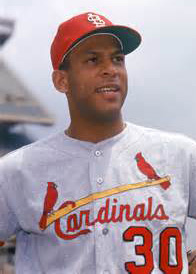
The ‘Baby Bull’ was born in Puerto Rico and became the National League Rookie of the Year when he debuted in 1958 with the San Francisco Giants during the franchise’ first season after moving west from New York. With the Giants he was runner-up in 1961 for the NL MVP award.
Traded to Saint Louis in May 1966, Cepeda was named as the 1967 NL Most Valuable Player for a Cardinals team that won the World Series. An 11x All-Star, Cepeda was voted into the Baseball Hall of Fame by a Veteran’s Committee in 1999.
Still a productive player, Cepeda was selected by the Toronto Blue Jays at 10th overall in the November 1976 MLB Expansion Draft.
Rickey Henderson
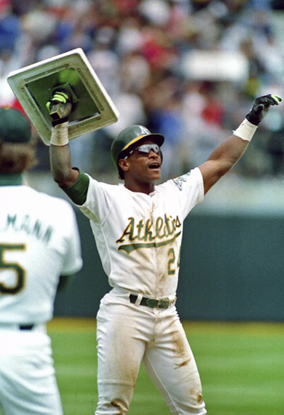
Henderson was voted into the Baseball Hall of Fame in his first year of eligibility in 2009, selected on 94.8% of the voter ballots. This came after a storied quarter-century career that lasted 1979-2003.
Henderson stole 33 bases over 89 games when he burst into the scene as a 20-year-old rookie with Oakland in 1979. That was the beginning of the most prolific base-stealing career in big-league history. By the end of that career, Henderson had amassed 1,406 career stolen bases and scored 2,295 runs, both all-time MLB records. He stole more than 100 bases three times, leading the AL in a dozen seasons.
Henderson scored over 100 runs on 13 occasions. He was the 1990 AL MVP with Oakland, a 10x All-Star, 3x Silver Slugger, and won a 1981 Gold Glove Award. He won a pair of World Series, with Oakland in 1989 and Toronto in 1993 and was the 1989 ALCS Most Valuable Player.
Whitey Herzog
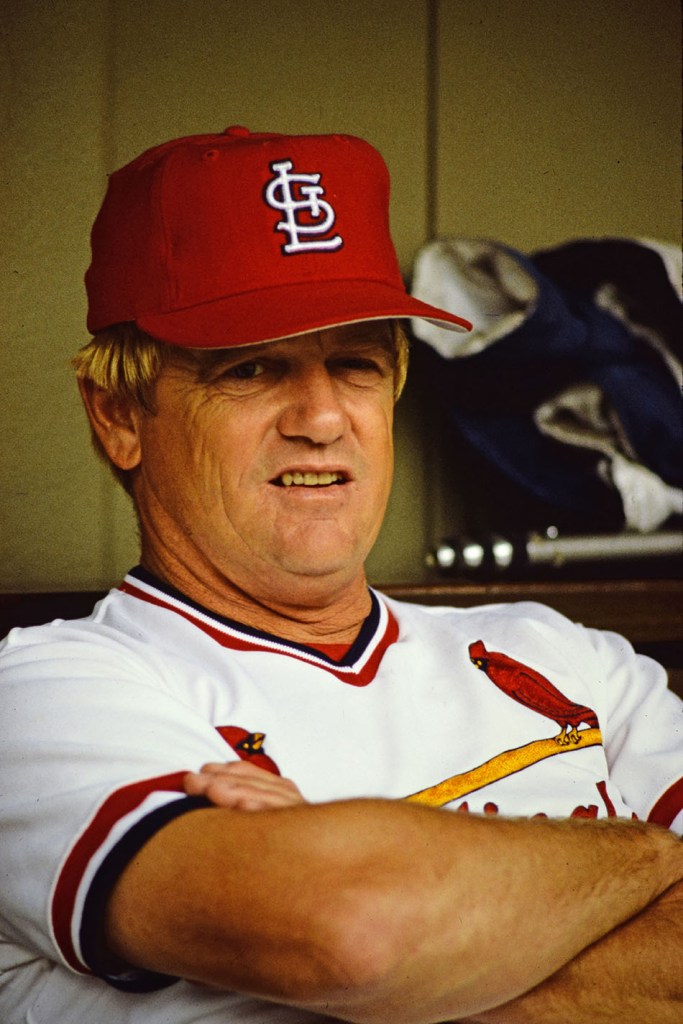
Dorrel Norman Elvert “Whitey” Herzog played eight largely undistinguished seasons with four different organizations in the big leagues from 1956-63. But it was as a manager that he would become a Baseball Hall of Famer, voted in by a Veteran’s Committee in 2010.
Herzog got his first managerial shot with Texas in 1973 at age 41 but was fired when the club went just 47-91 into early September. It was in his next full shot as a big-league skipper that he began to make his mark, leading the Kansas City Royals to three straight AL West Division crowns 1976-78.
In his next opportunity as skipper, with Saint Louis from 1980-90, Herzog earned his place in Cooperstown. There he guided the Cardinals to three NL pennants and the 1982 World Series championship.
Willie Mays
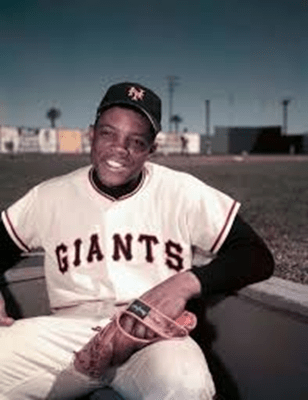
Mays began his professional career playing in 13 games with the Negro American League champion Birmingham Black Stallions at age 17 in 1948. He would debut in MLB three years later with the New York Giants, winning NL Rookie of the Year honors for a pennant-winning club.
After spending a year away from the game in 1953 due to military service, ‘The Say Hey Kid’ returned to the game and led the Giants to a World Series crown with his first monster campaign in 1954. That year he won the first of two NL MVP honors, slashing .345/.411/.667 while blasting 41 homers with 110 RBIs and 119 runs scored.
Over his 23-year career, Mays would become a 24x All-Star and 12x Gold Glove Award winner. Many feel that he is the best player in the history of the game, often focusing that discussion on him and his Godson, Barry Bonds. He was voted into the Hall of Fame in his first year of eligibility in 1979.
Pete Rose
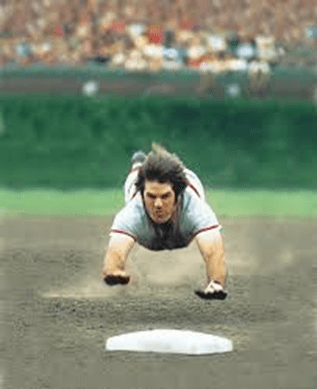
Rose was one of the grittiest, most versatile players to ever appear on a baseball diamond. ‘Charlie Hustle’ is also perhaps the single most controversial superstar in baseball history.
The MLB all-time ‘Hit King’, Rose broke in as the NL Rookie of the Year in 1963 with his hometown Cincinnati Reds. He would go on to amass 4,256 career hits over 24 seasons, most of those in Cincy where he was a member of the ‘Big Red Machine’ core that won back-to-back World Series in 1975-76.
Rose was the World Series MVP in 1975, adding to his Hall of Fame caliber trophy case. He was the 1973 NL MVP, runner-up for those honors in 1968, and finished in the top five voting five times. Rose was a 17x All-Star, and won three batting titles, two Gold Gloves, and a Silver Slugger Award.
Rose’ greatness spanned decades, revealed by the fact that he was a National League All-Star in 1965, 1975, and 1985. He is kept from Cooperstown enshrinement due to admitting to having gambled on the sport. This included his own team while serving as manager of the Reds.
Minnie Mendoza
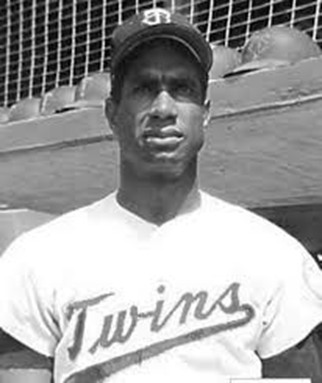
This year my “cup of coffee” player highlight is Minnie Mendoza, who passed away in Murrells Inlet, South Carolina on September 9 at age 89.
Cristobal Rigoberto ‘Minnie’ Mendoza was a native of Cuba who began playing professionally in unaffiliated minor league baseball at age 19. He would toil at various levels of the minors for 16 years before finally getting his big-league shot.
In 1958 at age 23, Mendoza joined what was then the Washington Senators organization, with the franchise becoming known as the Minnesota Twins the following year. He would play with their Charlotte affiliate for a decade over the course of his career, a major factor in his settling down in the Carolinas post-career.
Mendoza finally broke camp with the Twins as a utility infielder at age 36 for the start of the 1970 season. His first appearance came as a defensive substitute at third base in the 9th inning of a 6-4 victory over the host Chicago White Sox on April 9 at White Sox Park.
It would take two full weeks for Mendoza to get his next opportunity. In his first full game, Mendoza took over for future Hall of Famer Rod Carew, who was scratched with a late illness. He took a 0-5 collar in a 7-5 loss at Metropolitan Stadium to those same Chisox.
In a pinch-hitting appearance during his ninth big-league game Mendoza finally registered the first of what would be three career hits. On May 2 during a 4-2 victory over the host Baltimore Orioles at Memorial Stadium, Mendoza lined a one-out single to center field off Mike Cuellar. Three batters later he scored what would prove the game-winning run on a double by Harmon Killebrew.
Mendoza last appeared in a big-league box score on June 7 at RFK Stadium in Washington. Unfortunately, he never actually got to play. Announced as a pinch-hitter, he was replaced thanks to a pitching change made by Senators’ skipper Ted Williams. Instead, Charlie Manuel pinch-hit for Mendoza.
Over the course of his 16 games, Mendoza went 3-16 (.188) with two RBIs. He would return to Charlotte where he stayed through 1972. He played on final season in the Mexican League in 1973 before retiring as a player. Mendoza then became a coach in Charlotte for many years.
In 1988, Mendoza returned to the big leagues as the Baltimore Orioles first base coach. After one season he became a roving minor league instructor in the O’s organization. In 1992 he got his lone chance to manage as skipper of the Burlington Indians of the Appalachian League, leading the club to a 35-31 record and third place finish.
MORE BASEBALL
11.15.24 – Primer on the Arizona Fall League and 2024 championship preview
8.30.24 – 50th anniversary of the Swingin’ A’s three-peat World Series champions
4.18.24 – Mike Schmidt’s 1976 four home run game at Wrigley Field
5.21.23 – A look back at Nolan Ryan’s seven career no-hitters
 MATT VEASEY
Always a pleasure to read you
Happy new year Matt
LikeLike